
Capacitive sensor
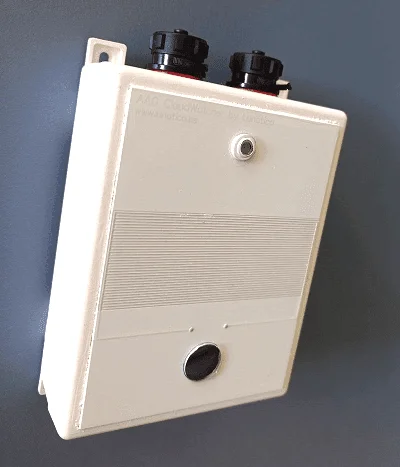
The capacitive rain sensor has been part of CloudWatcher since the beginning. It detects changes in electrical capacitance across a large sensing surface when water is present, giving it high sensitivity and the ability to provide some indication of the amount of rain, not just its presence.
Advantages
- Large detection surface—catches light drizzle reliably
- Integrated seamlessly into the CloudWatcher unit
- Robust heater—effective in snow and heavy dew conditions
- More affordable than the Hydreon variant
- Provides precipitation intensity indication
Considerations
- Dirt accumulation on the sensing surface requires periodic cleaning
- May need recalibration over time
- Delicate sensing surface—handle carefully during cleaning
Hydreon RG-9 optical sensor
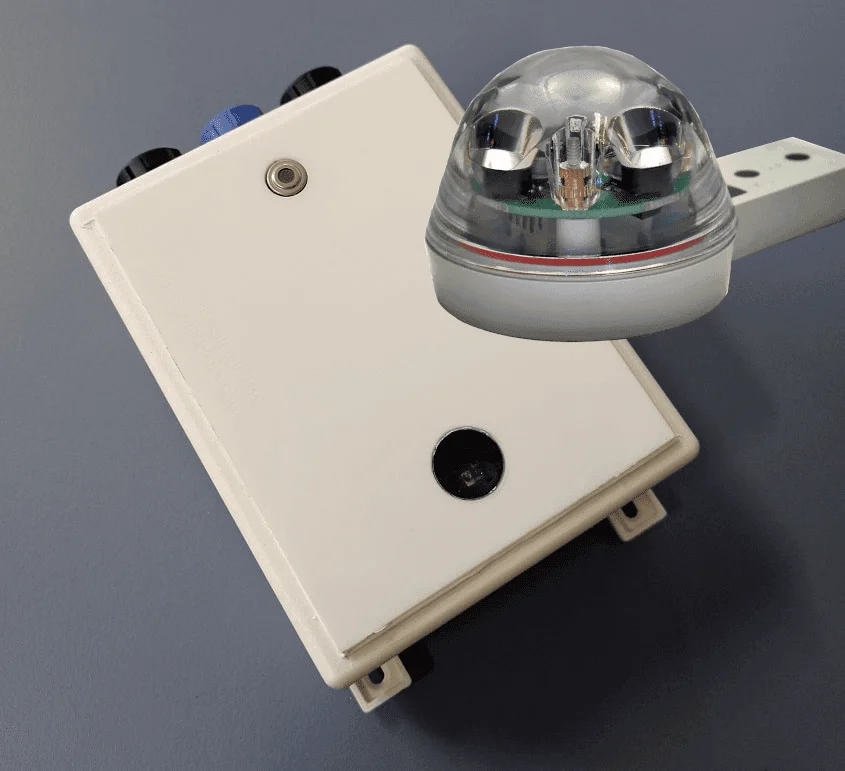
The Hydreon RG-9 uses a fundamentally different approach: optical sensing of rain droplets on a glass surface using infrared light. This gives it very high sensitivity to very light rain, but it only provides a rain yes/no signal, with no information about precipitation intensity.
Advantages
- Very high sensitivity—detects the very first drops
- Large detection area
- Different sensing principle = redundancy when paired with capacitive
- Self-cleaning optical surface in most rain events
- Very good integration with the CloudWatcher
Considerations
- Weaker heater—not recommended for snow or heavy dew climates
- No precipitation intensity data—rain yes/no only
- Can be confused by moving shadows or direct intense sunlight—more of a concern for solar observatories than night observing
- In very dusty or windy environments, the transparent dome eventually needs replacing
- Higher cost than the capacitive version
Which should you choose?
Both sensors receive full Lunatico support and work reliably in the right environment.
Choose capacitive if your site experiences snow, heavy dew, or frost: the stronger heater keeps the sensor functional. It also gives you precipitation intensity data, which can be useful for deciding when to reopen.
Choose Hydreon RG-9 if you want maximum sensitivity to the very first drops and your climate is mild enough that the weaker heater is not a concern. It is also a good second sensor if you already have a capacitive CloudWatcher and want redundancy.