The case for traditional focusers
For guided astrophotography with sub-arcsecond tracking requirements, the focuser is not just a focusing mechanism — it is part of the optical train's mechanical rigidity. Any flex, shift, or vibration in the focuser translates directly into tracking and guiding errors.
Rigidity
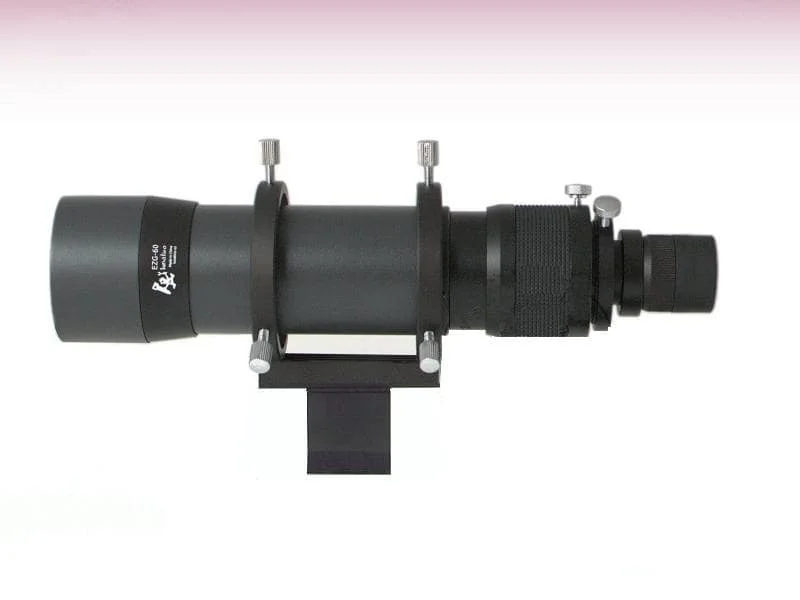
A good quality Crayford or rack-and-pinion focuser, properly tensioned, provides excellent rigidity across the full range of telescope orientations. The drawtube grips the load consistently, and tension adjustments allow the user to tune stiction to match the imaging train weight.
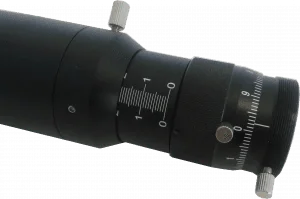
Helical microfocusers work on a rotating thread mechanism. Under load — a camera, filter wheel, and field flattener — the thread engagement can allow small amounts of differential motion as the telescope moves through its range. This is enough to introduce periodic guiding errors or focus drift that a traditional focuser would not exhibit.
Focus travel
A standard Crayford focuser typically offers 50–100 mm of focus travel. This gives you room to work when swapping cameras, imaging at different temperatures, or using optical accessories with different back-focus requirements. Microfocusers, by their nature, offer very little travel — typically 1–5 mm — which can make initial focus acquisition difficult and limits flexibility in setup changes.
The microfocuser disadvantages in practice
- Limited travel: Insufficient range for large temperature swings or accessory changes
- Thread flex under load: Introduces shift as the telescope slews
- No absolute position: Most microfocusers have no step count or position memory; software compensation is not possible
- Incompatibility with heavy imaging trains: Not designed to carry the weight of modern camera + filter wheel + flattener combinations
For visual observation, the microfocuser's advantages — compactness, speed of adjustment, no drawtube slip — are real. The traditional focuser's advantages emerge specifically in the context of long-exposure guided astrophotography. Know your use case before choosing.
The external controller advantage
When you motorise a traditional focuser with an external Lunatico controller (Armadillo, Platypus, Tarsier, or Limpet), you get the best of all worlds: the mechanical rigidity and travel of the traditional focuser, combined with the precision and automation of a stepper motor drive, absolute position memory, temperature compensation, and full ASCOM compatibility.